Across my work with North Carolina Virtual Public School, the University of Denver, RaLytics, and private consulting projects, I’ve used Articulate Rise and Storyline to bring instructional design concepts to life. My focus has been on building content that is visually intuitive, accessible, and grounded in real-world performance outcomes. The projects showcased here demonstrate how I apply design thinking principles, accessibility standards, and creative interactivity to create meaningful digital learning experiences.
Human-Centered Design and Empathy in Learning
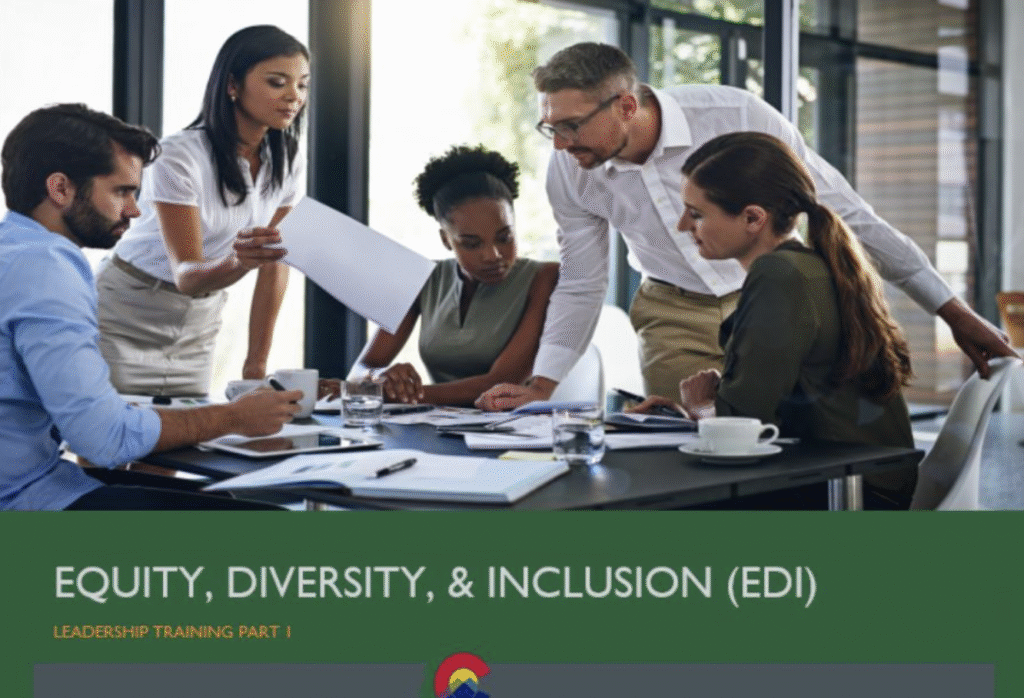
Discuss how EDI content requires thoughtful tone, inclusive language, and cultural responsiveness. You can highlight how you approached sensitive topics with empathy—using branching dialogue, realistic scenarios, and opportunities for reflection rather than directive messaging.
“The course design was grounded in human-centered principles, ensuring each learner could see themselves represented in the content and feel safe exploring complex social topics.”
Explore the full version of the EDI Articulate Storyline training
Accessibility Leadership and Perspective-Taking
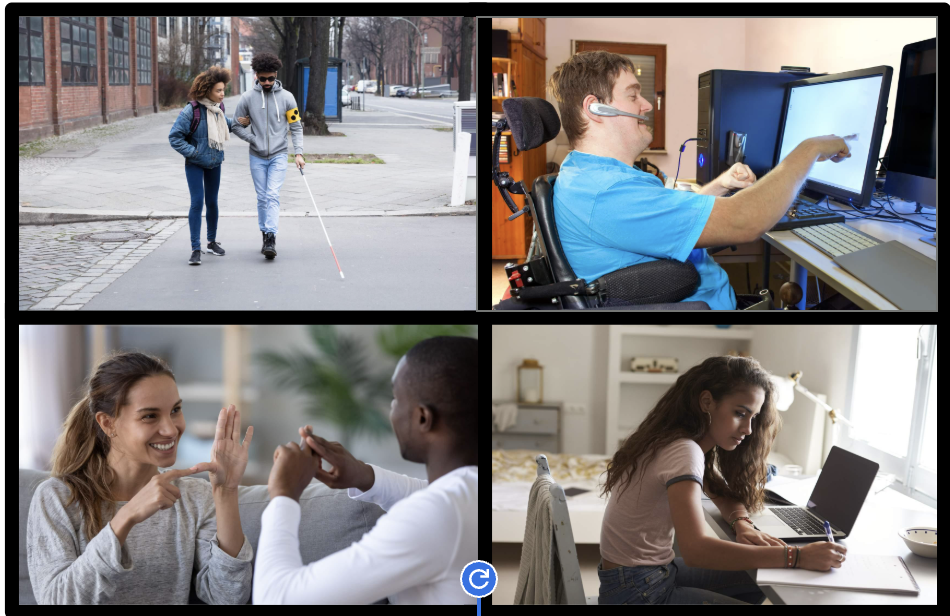
As part of an ongoing initiative to foster accessibility awareness, I co-designed an Articulate Rise course built around four personas representing diverse disability experiences. The training explored accessibility through multiple perspectives, visual, auditory, cognitive, and mobility, encouraging participants to empathize, reflect, and apply inclusive design principles in their own work. The personas were developed collaboratively with subject matter experts to ensure authenticity and accuracy, resulting in an engaging, narrative-driven learning experience.
Explore the full version of the Course Development Accessibility Training
Project Spotlight: Colorado County Attorney Training
Platform: Articulate Storyline
Tools Integrated: Vyond (animation) | Murf.ai (AI-generated narration)
Client: State of Colorado – Butler Institute for Families, University of Denver
Overview
As the lead instructional designer for this statewide initiative, I was tasked with developing Module 1 of a training series designed to help county attorneys navigate sensitive and complex issues within the child welfare system. The module combined scenario-based storytelling, expert insights, and authentic dialogue to immerse participants in realistic professional contexts.
Collaboration and Stakeholder Engagement
This project required close coordination with attorneys, guardian ad litems, caseworkers, and representatives from multiple state agencies. Through structured design sessions, we gathered and validated real-world perspectives to ensure the learning experience accurately reflected legal and ethical challenges faced by professionals in the field.
Multimedia Integration and Technical Design
To enhance engagement and realism, I integrated Vyond animations directly into Articulate Storyline scenes, allowing learners to experience branching case studies and visual narratives within the same interface. Murf.ai voice synthesis was used strategically to produce consistent, high-quality narration for dialogue-based segments—balancing human authenticity with production efficiency.
“By blending Storyline’s interactivity with Vyond’s storytelling and Murf.ai’s voice generation, the module achieved a cinematic quality while maintaining accessibility and scalability across state systems.”
Design Philosophy and Considerations
- Authenticity Through Multimedia: Used Vyond animations to visualize complex interpersonal dynamics while maintaining a professional, realistic tone.
- Accessible, Inclusive Audio: All AI-generated audio included transcripts and text equivalents to ensure screen reader compatibility.
- Streamlined Learner Pathways: Employed conditional triggers and variables in Storyline to personalize feedback and navigation.
- Ethical and Emotional Sensitivity: Applied trauma-informed design principles to handle sensitive content with care and respect.
- Consistency Across Tools: Created unified color schemes, typography, and visual branding to ensure seamless integration between Vyond clips and Storyline content.
Impact and Reflection
The final training was distributed to county attorneys across Colorado and became a model for subsequent modules in the series. The success of this pilot informed future design protocols, including AI-assisted content development workflows used in later phases of the project.
Explore the full version of the Colorado County Attorney Training