During my time as a Senior Instructional Designer with the Butler Institute for Families at the University of Denver, I was challenged to reimagine how county attorneys are trained to respond to sensitive and nuanced situations within the child welfare system. To meet this need, I used Vyond to design animated scenarios that mirror real-life interactions among key professionals, bringing authenticity, empathy, and clarity to complex training topics.
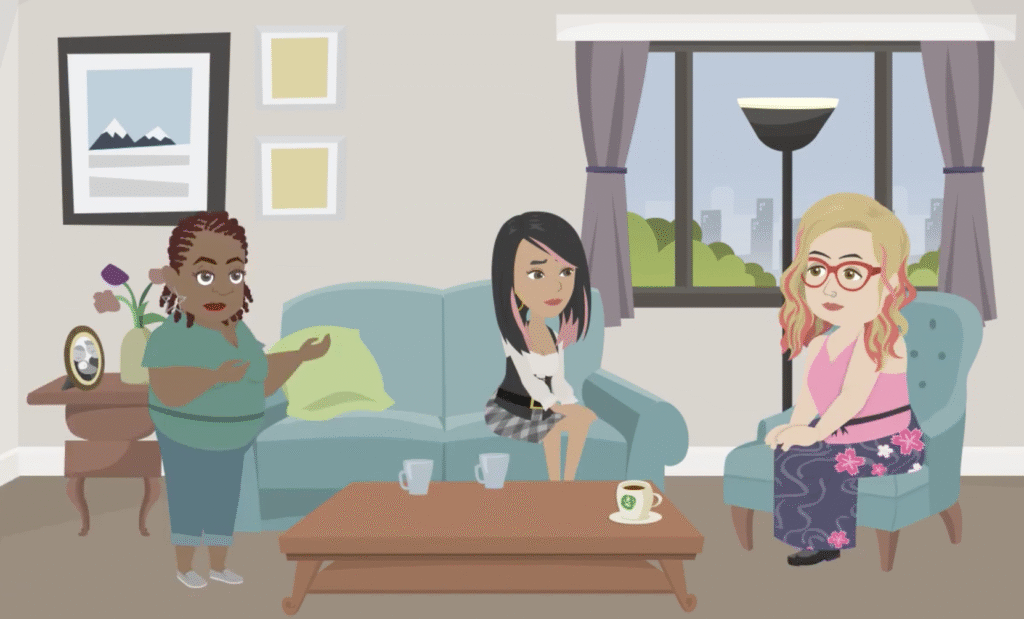
Character Design and Collaboration
As part of this project, I facilitated design workshops with stakeholders from several Colorado state agencies. These sessions focused on creating named personas and visual identities for each animated character. By aligning on the look, tone, and behavior of every role, from county attorneys to social workers, we ensured the animations represented real-world experiences with accuracy and empathy.
Authenticity in Dress and Setting
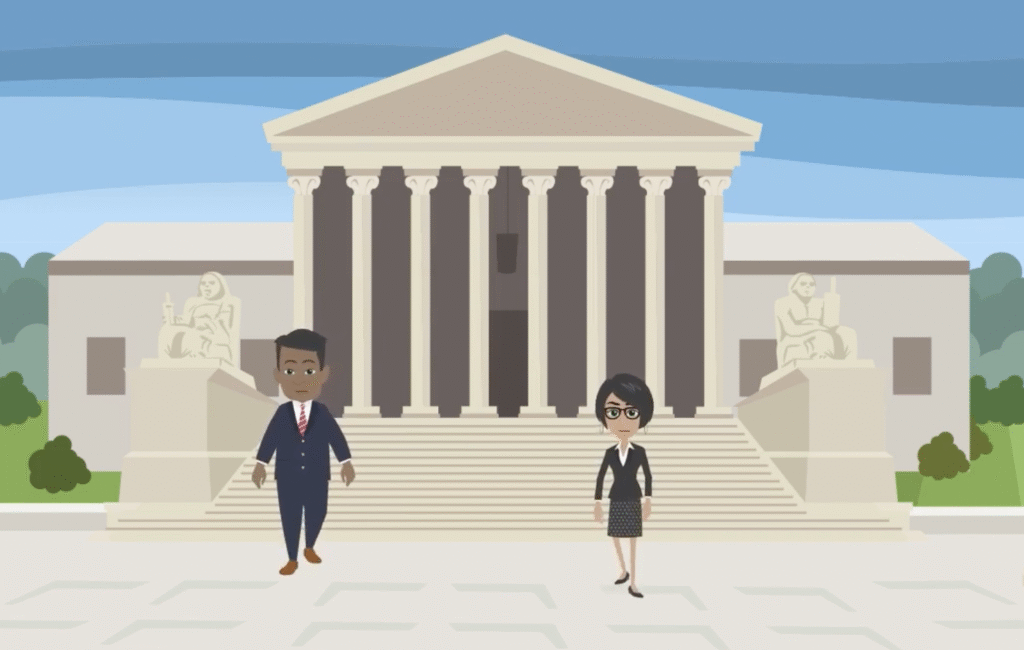
To maintain visual and contextual accuracy, I facilitated additional review sessions with agency partners to evaluate the characters’ attire and environmental details. Each scene’s clothing choices, office layouts, and courtroom settings were refined to align with real-world expectations and workplace norms. This attention to detail strengthened the realism of the training and ensured participants could recognize and relate to their professional environments.
Streamlining Content Development Through AI Prompting
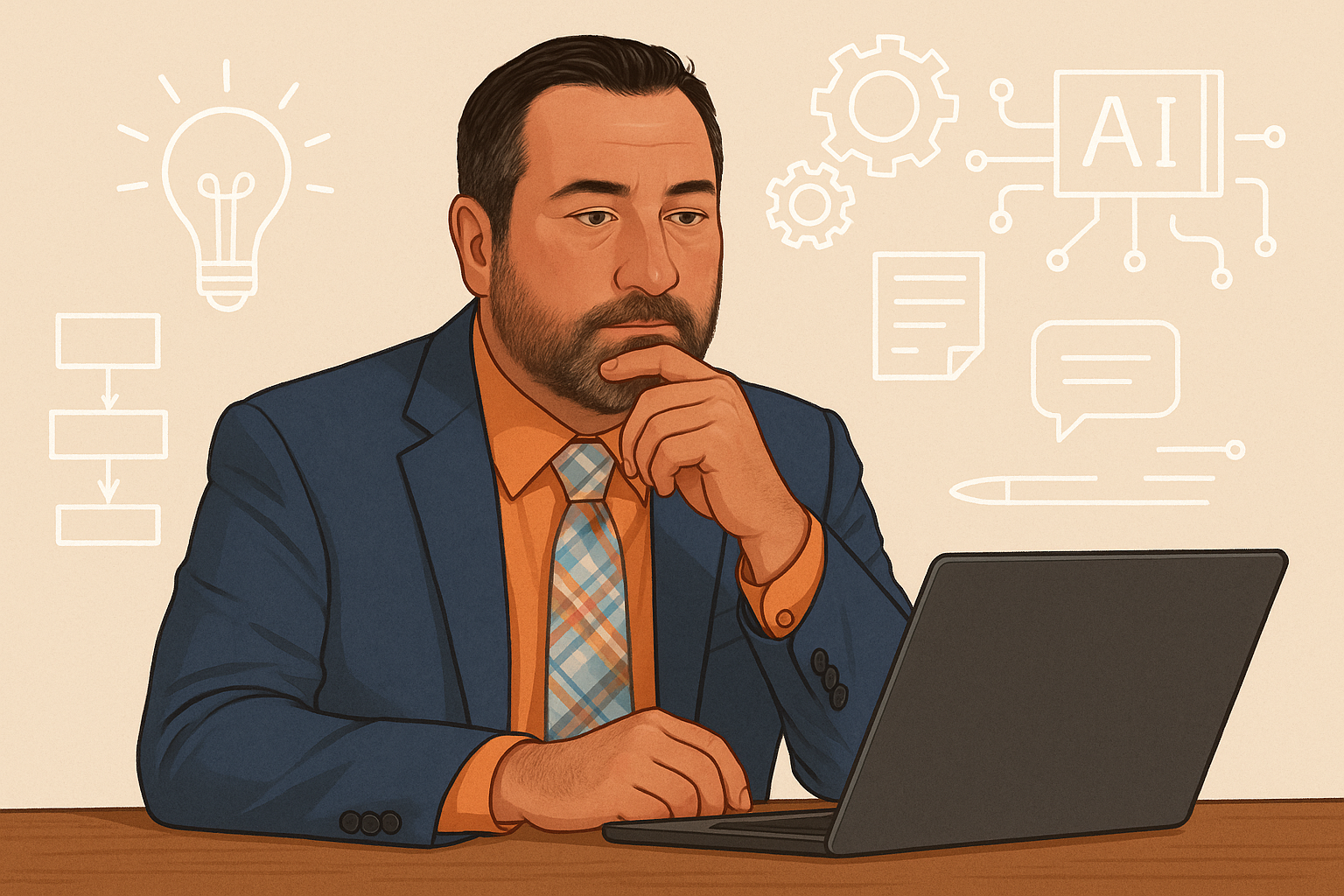
Once Module 1 was complete, I developed a streamlined plan for Module 2 using artificial intelligence prompting to accelerate design and writing. Drawing from templates and structures created during Module 1, I used AI to draft initial narratives, scene outlines, and persona descriptions. Team members then focused their expertise on reviewing and refining content instead of generating it from scratch. This new protocol significantly reduced planning time, improved consistency across modules, and allowed the team to invest more energy into creative design and validation.
Two Professionals Reflect: Design Decision Emphasis
In this animation, a male and female attorney are shown walking out of the courthouse in professional business attire. During the design phase, stakeholders highlighted that accurate courtroom representation was essential to maintaining credibility with the target audience of practicing attorneys. Incorporating their feedback, I ensured that the characters’ suits, body language, and environment conveyed professionalism and aligned with the expectations of the legal field.
Plain Language: Strategic Design Overview
This animation was strategically designed to model the use of plain language in emotionally charged, high-stakes conversations. The scene depicts a professional counseling interaction between a mother, whose children have been removed from her care due to substance use and other challenges, and a caseworker. The goal was to demonstrate how professionals can communicate complex legal and procedural information with empathy, clarity, and respect. By focusing on authentic dialogue rather than legal jargon, the animation helps learners recognize the power of plain language in building trust and understanding during difficult discussions.
The Case Resolution: Emotional and Human-Centered Focus
The final scene brings closure through hope. Lisa and Roberto, once separated by substance use and life challenges, now share a moment of co-parenting unity outside their family home. The video was intentionally designed to evoke empathy and reinforce the message that child welfare outcomes can be positive when families are supported and professionals practice empathy, consistency, and clear communication. This human-centered storytelling approach reminds learners that accessible, compassionate communication and collaboration can rebuild trust, and lives.